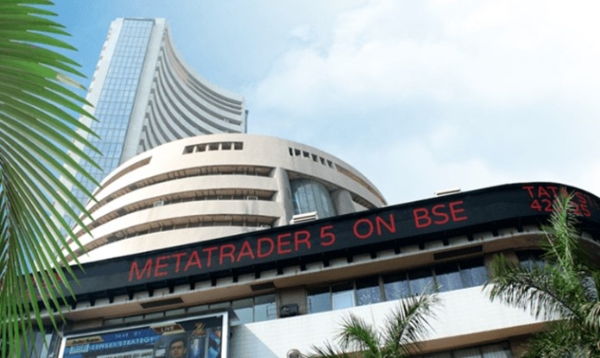
New Delhi, 15 January (H.S.): India's benchmark stock exchanges, BSE and NSE, observed a complete trading holiday on Thursday due to Maharashtra's municipal corporation elections, suspending all operations across equity, derivatives, and commodity segments despite no prior listing in the annual holiday calendar.
This abrupt declaration, issued via circular just two days ago under the Maharashtra Negotiable Instruments Act, aligns with the state government's designation of the day as a public holiday to facilitate seamless polling and maximize voter turnout across urban civic bodies.
Both exchanges halted activities in equity segments, equity derivatives, securities lending and borrowing (SLB), currency derivatives, NDS-RST, tri-party repo, electronic gold receipts (EGR), and commodity derivatives on BSE, while NSE suspended equities, corporate bonds, new debt segments, negotiated trade reporting platforms, mutual funds, SLB schemes, currency derivatives, commodities, and interest rate derivatives.
Last-Minute Legal Mandate Overrides Calendar
Traditionally, Indian markets close weekly on Saturdays and Sundays, supplemented by gazetted holidays and select observances pre-announced through exchange circulars; 2026's initial schedule omitted January 15, classifying it for normal operations until Maharashtra invoked the Negotiable Instruments Act, mandating closure of government offices, semi-government entities, corporations, boards, public sector undertakings, banks, and controlled institutions within municipal poll vicinities.
This statutory measure ensures unhindered democratic participation amid Maharashtra's high-stakes civic elections, where unexpected political alliances have blurred traditional lines, as reported in concurrent coverage.
The unscheduled pause underscores regional electoral priorities' precedence over financial market continuity, with BSE Sensex and Nifty 50 benchmarks frozen from opening bell.
Beyond today's unforeseen holiday and routine weekend closures, India's exchanges anticipate 16 additional non-weekend suspensions in 2026, four of which coincide with Saturdays or Sundays, yielding 12 effective trading disruptions; March emerges as the busiest with three sequential holidays—Holi on March 3, Ram Navami on March 26, and Mahavir Jayanti on March 31—concentrating closures in a single quarter.
Conversely, February, July, and August face no extra holidays beyond weekends, as national observances align fortuitously with non-trading days, insulating market operations from Republic Day, Independence Day, or similar interruptions; this calibrated calendar balances festive observances with investor accessibility amid volatile global cues from U.S. tariffs to Venezuelan transitions.
---------------
Hindusthan Samachar / Jun Sarkar

15 Jan 2026
World Bank Sharpens India's Growth Lens: 7.2% Surge Forecast for FY 2025-26 Amid Tariff Headwinds

14 Jan 2026