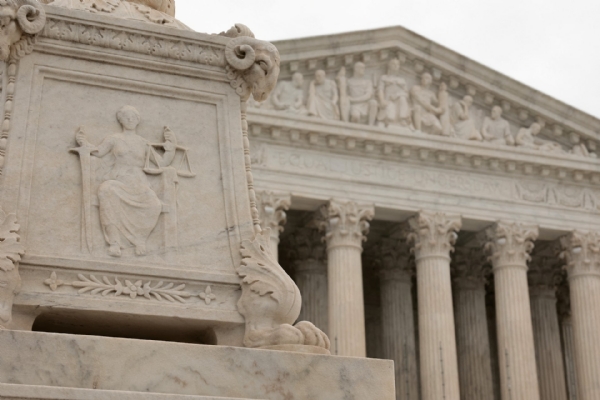
Washington, DC, 14 January (H.S.): The U.S. Supreme Court signaled strong inclination on Tuesday to affirm state prohibitions preventing transgender athletes—those assigned male at birth—from competing in girls' and women's sports categories, addressing challenges from Idaho and West Virginia laws.
During over three hours of oral arguments, conservative justices emphasized biological sex as pivotal for competitive equity, citing disparities in muscle mass, bone density, lung capacity, and overall athletic prowess that correlate robustly with male physiology.
Idaho's Fairness in Women's Sports Act
Idaho Solicitor General Alan Hurst defended the 2020 statute, asserting it safeguards female-only competitions essential for equitable participation. Sex is what matters in sports, Hurst argued, underscoring immutable physiological advantages persisting even post-testosterone suppression.
Lia Thomas's 2022 collegiate swimming triumphs—after transitioning from UPenn's men's team—exemplified the controversy, prompting UPenn to ban transgender women and settle related civil rights claims. Justice Samuel Alito questioned claims of mitigated advantages, noting scientific debates on treatment efficacy and widespread female athlete objections to perceived unfairness .
West Virginia's Save Women's Sports Act
The 2021 West Virginia measure, challenged under Title IX, bars alignment by self-identified gender over biological sex. Solicitor General Michael Williams warned reversal would erode Title IX protections Congress intended for girls' opportunities, forcing schools to prioritize identity over biology.
Justice Brett Kavanaugh acknowledged the zero-sum dilemma: transgender inclusion displaces cisgender girls from rosters, playing time, or lineups, mirroring policies by the U.S. Olympic Committee and NCAA excluding transgender women from elite female events. President Trump's February executive order further enables federal defunding of noncompliant schools.
Broader Context and Protests
Twenty-seven states now enforce such bans amid rallies outside the court by advocates and opponents. Transgender college student Rebekah Bruesehoff, 19, from New Hampshire, advocated inclusive participation beyond athletics, framing it as authentic self-expression.
A ruling is anticipated by June or early July, potentially standardizing nationwide standards as 27 states align against federal equal protection and Title IX interpretations favoring biological distinctions.
---------------
Hindusthan Samachar / Jun Sarkar