Kolkata, 17 June (H.S.) — The upcoming assembly bypoll in West Bengal’s Kaliganj constituency is shaping into a high-stakes triangular contest between the Trinamool Congress (TMC), the Bharatiya Janata Party (BJP), and the Congress-Left alliance. Scheduled for June 19 with counting on June 23, the election is marked by a potent mix of identity politics, legacy narratives, and a surge in nationalist sentiment following India's recent military offensive, Operation Sindoor.
This is the first electoral battle in the state since Operation Sindoor, launched by the Indian armed forces on May 7 in response to the Pahalgam terror attack. The targeted strikes in Pakistan and Pakistan-occupied Kashmir (PoK) have amplified national security rhetoric—particularly in BJP’s campaign narrative in this minority-dominated constituency.
The bypoll was necessitated by the death of sitting TMC MLA Nasiruddin Ahmed earlier this year. The ruling party has fielded his daughter, Alifa Ahmed, a 38-year-old corporate professional with a BTech degree, to carry forward her father’s legacy.
“After my father’s death, I felt it was my duty to fulfill his dreams. With the blessings of Mamata Banerjee and the people of Kaliganj, I decided to step into public life,” Alifa said after filing her nomination.
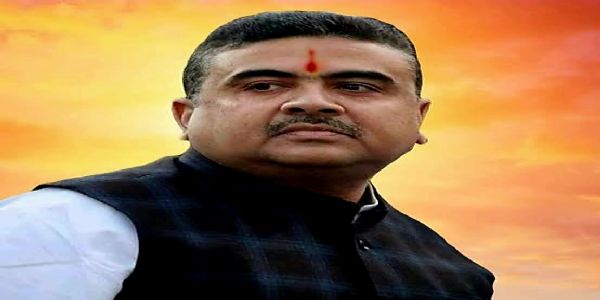
The BJP has nominated Ashis Ghosh, a local panchayat member and former mandal president. State BJP president Sukanta Majumdar described him as “a loyal and grassroots-level worker” who would challenge the “TMC’s misrule.”
Representing the Congress-Left alliance is Kabil Uddin Sheikh, nominated after discussions between the Congress and the CPI(M). Despite initial interest from CPI(M), which cited its recent performance in the 2024 Lok Sabha and 2023 panchayat polls, the RSP—another Left ally with historical roots in Kaliganj—agreed to support Congress for the sake of unity.
“We fought well in Kaliganj in recent elections. In 2016, the Congress-Left alliance won this seat. A joint candidate can once again defeat both TMC and BJP,” said CPI(M) state secretary Mohammed Salim.
The bypoll comes in the shadow of the recent Murshidabad riots, which left three dead and many homeless, intensifying concerns over communal tensions. With Kaliganj comprising nearly 54 per cent Muslim voters, along with significant Scheduled Caste (14.43 per cent) and Scheduled Tribe (0.42 per cent) populations, identity politics is expected to play a central role.
The TMC has accused the BJP of stoking communal divisions, while the BJP has framed the contest as a referendum on corruption and appeasement.
“The BJP thrives on dividing communities, but Kaliganj has always rejected communal hatred,” said Alifa Ahmed. In response, BJP leaders counter that their campaign is focused on inclusive development.
“This isn’t about Hindu or Muslim—it’s about governance, which the TMC has failed to deliver,” said Ashis Ghosh.
Kaliganj has historically swung between parties. The RSP held the seat multiple times during the Left era, while Congress won it in 1987, 1991, and 1996. TMC took the seat in 2011, and the Congress-Left alliance won it again in 2016—though the winning MLA later joined TMC. In 2021, TMC reclaimed it with over 54 per cent vote share, compared to BJP’s 31 per cent and Congress’ 12 per cent.
Political analyst Maidul Islam noted that identity politics will likely be the cornerstone of both TMC and BJP strategies in this bypoll.
“Post-Murshidabad riots, identity will take center stage. BJP will also leverage nationalist sentiment following Operation Sindoor, while the TMC may support the government’s stance but question the Centre’s failure to prevent the Pahalgam attack,” Islam said.
To ensure peaceful polling, the West Bengal Chief Electoral Officer has announced the deployment of 20 companies of Central Armed Police Forces (CAPF).
The results of the Kaliganj bypoll are expected to offer key insights into the evolving political landscape in West Bengal ahead of the 2026 state assembly elections.
Hindusthan Samachar / Satya Prakash Singh