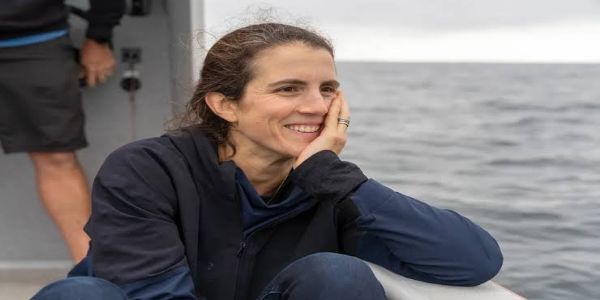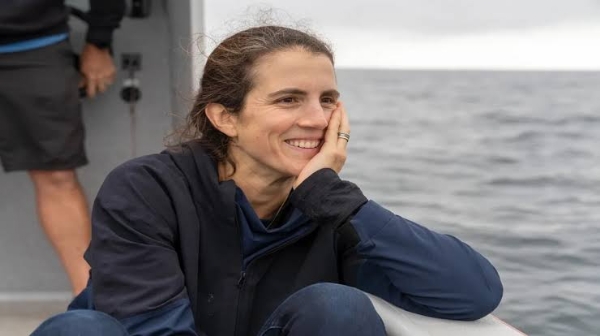
New York, 31 December (H.S.): Tatiana Schlossberg, an environmental journalist and author who was the granddaughter of former US President John F. Kennedy, has died aged 35 after a battle with an aggressive form of leukemia. Her death was announced on Tuesday morning in a family statement shared by the John F. Kennedy Library Foundation, which said, “Our beautiful Tatiana passed away this morning. She will always be in our hearts.”
Schlossberg revealed in a searingly personal essay for The New Yorker in November, titled “A Battle With My Blood”, that she had been diagnosed with acute myeloid leukemia in May 2024, shortly after giving birth to her second child.
Doctors informed her that the disease carried a rare mutation usually seen in older patients and that her prognosis was terminal, giving her less than a year to live.
In the essay, she described undergoing multiple rounds of chemotherapy, a bone marrow or stem-cell transplant and participation in clinical trials in an attempt to extend her life.
She wrote movingly of the fear that her young children would be too small to remember her, saying that their faces “lived permanently on the inside of my eyelids.”
Family legacy and personal grief
Tatiana Celia Kennedy Schlossberg was the daughter of Caroline Kennedy, the US ambassador to Australia and Japan and only surviving child of President Kennedy, and designer Edwin Schlossberg.
As a member of one of America’s most scrutinised political families, she grew up in the shadow of public tragedy, including the assassination of her grandfather in 1963 and the 1999 plane-crash death of her uncle, John F. Kennedy Jr.
In her New Yorker piece, she wrote that, throughout her life, she had tried to be a good daughter and to protect her mother from further sorrow, only to feel that her illness had inflicted “a new tragedy” on the family that she was powerless to prevent.
She also expressed anguish at the pain her death would cause those closest to her and reflected on the weight of the Kennedy legacy amid repeated loss.
Schlossberg used part of her final essay to criticise her uncle Robert F. Kennedy Jr., who was appointed US secretary of health and human services after his controversial independent presidential run in 2024. She voiced disappointment that someone who had promoted vaccine misinformation and fringe health views would oversee the nation’s public-health apparatus, calling his conduct in politics an embarrassment to her and the rest of the family.
Her comments underscored a widening ideological gulf within the Kennedy clan, many of whom publicly opposed Robert F. Kennedy Jr.’s presidential bid and later questioned his suitability for high office.
Even as she faced a terminal diagnosis, Schlossberg linked her personal experience of the health-care system to broader concerns about science, evidence and government responsibility.
Career in climate and environmental journalism
Before her illness became public, Schlossberg carved out a distinct professional identity as a reporter and commentator on climate change and environmental issues. She worked as a reporter for The New York Times, where she covered climate, energy and environmental policy, and contributed pieces to outlets including The Washington Post, Vanity Fair and other major publications.
Her 2019 book, “Inconspicuous Consumption: The Environmental Impact You Don’t Know You Have,” examined how everyday habits, consumer goods and hidden systems—from data centres to global supply chains—silently contribute to environmental degradation.
The book won the Rachel Carson Environment Book Award from the Society of Environmental Journalists and was praised for translating complex science and systems into accessible, often wry, prose.
Schlossberg frequently focused on how climate solutions can emerge from local innovation and overlooked infrastructure. In a 2021 report for The New York Times, she documented experiments to capture waste heat from the London Underground and redirect it into homes, illustrating how cities could reduce emissions through creative use of existing systems.
In a 2019 television interview, she described climate change as “the biggest story in the world,” saying it touched science, politics, business and health and insisting that journalists had a responsibility to make the subject comprehensible rather than paralysing.
Her work, colleagues later noted, tended to favour explanation over alarmism, emphasising how structural choices and policy design shape individual options.
Private life and survivors
Schlossberg is survived by her husband, George Moran, a physician, and their two young children, whose names have largely been kept out of public view to protect their privacy.The couple married in 2017 on Martha’s Vineyard in a ceremony attended by close family and friends, including many members of the extended Kennedy family.She is also survived by her mother, Caroline Kennedy, her father, Edwin Schlossberg, her sister, Rose, and her younger brother, Jack, who recently launched a bid for a congressional seat in New York.
Funeral arrangements have not yet been publicly announced, and the family has requested privacy as they mourn a daughter and sister described in their statement as “brilliant, joyful and fiercely devoted to her family and to the planet we share.”
---------------
Hindusthan Samachar / Jun Sarkar
31 Dec 2025