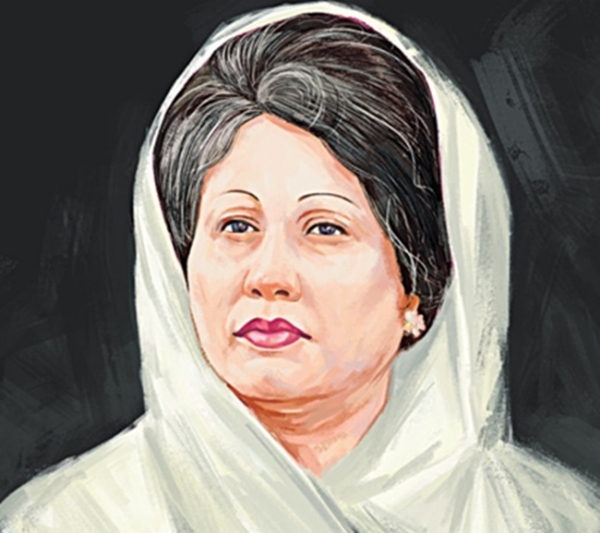
Dhaka, 31 December (H.S.): Tarique Rahman, acting chairman of the Bangladesh Nationalist Party (BNP) and elder son of the late former Prime Minister Begum Khaleda Zia, delivered a profoundly emotional tribute on Wednesday via social media, portraying his mother as both an unyielding national icon and a pillar of familial fortitude following her death on Tuesday at age 80.
Zia succumbed around 6:00 a.m. local time at Evercare Hospital in Dhaka shortly after Fajr prayers, succumbing to protracted ailments including liver cirrhosis, heart disease, diabetes, arthritis, and kidney complications after a month-long admission—no accidents marred her final hours, though her condition had deteriorated critically amid denied advanced treatments overseas.
Her funeral rites, including namaz-e-janaza at 2:00 p.m. at Jatiya Sangsad Bhaban followed by burial beside husband Ziaur Rahman at his Sher-e-Bangla Nagar mazar, proceeded without incident under tight security.
Public Leader, Private Guardian
In a poignant Facebook and X post timestamped around midday Tuesday, Rahman proclaimed Zia had “responded to the call of Almighty Allah,” invoking “Inna lillahi wa inna ilayhi raji’un” while hailing her as “the leader of the nation, an uncompromising leader, the Mother of Democracy, the Mother of Bangladesh.”
He chronicled her public life as one of “sacrifice and struggle,” steadfast against autocracy, fascism, and domination to champion freedom, sovereignty, and parliamentary restoration, noting the nation now mourns a “guiding presence” whose absence will profoundly resonate.
At home, Rahman depicted her as the “truest guardian,” whose “infinite love” fortified the family through arrests, medical deprivations, and persecution, her “resilience... not loud, but unbreakable.”
Enduring Familial Tragedies with Grace
Rahman evoked Zia’s personal bereavements, including the assassination of husband and BNP founder President Ziaur Rahman in 1981 and the 2015 death of younger son Arafat Rahman Coco from sepsis, affirming that “in that loss, this nation and its people became her family.”
Despite “pain, confinement, and uncertainty,” she shielded loved ones with “courage and compassion,” transforming grief into patriotic devotion where Bangladesh embodied her extended kin.
No mishaps attended these reflections, as Rahman—exiled in London for over a decade amid graft convictions he deems politically motivated—urged prayers for her soul’s peace.
Legacy of Patriotism and Collective Gratitude
Zia departs an “unforgettable legacy of patriotism, sacrifice, and resistance” destined to “live on in Bangladesh’s democratic conscience,” per Rahman, who extended gratitude to domestic and international well-wishers for condolences, including India’s External Affairs Minister S Jaishankar attending the funeral. Exiled since 2008, Rahman positioned Zia as democracy’s matriarch, her vision enduring despite BNP’s opposition stints in 1991 and 2001 marred by corruption probes.
---------------
Hindusthan Samachar / Jun Sarkar

31 Dec 2025