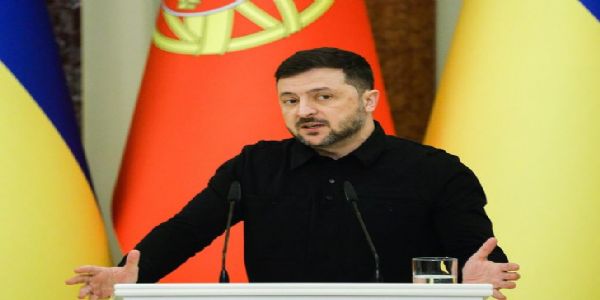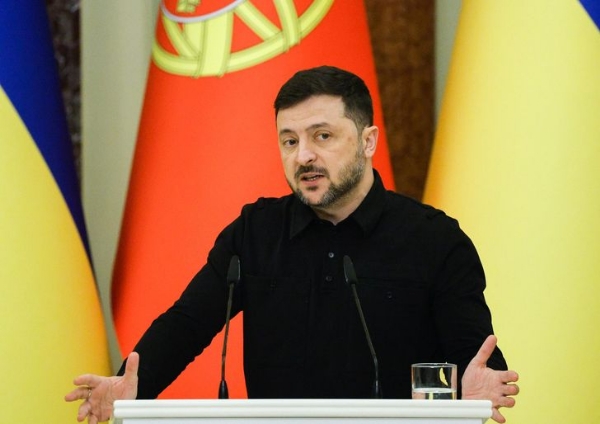
Kyiv/Florida, 28 December (H.S.): Ukrainian President Volodymyr Zelenskyy is travelling to Florida on Sunday for high-stakes peace talks with US President Donald Trump, hours after Russia launched one of its most intense drone and missile barrages on Kyiv in recent months, killing at least one person and injuring dozens.
Ukrainian officials said the overnight assault, which lasted around 10 hours, targeted critical energy facilities and civilian infrastructure in the capital, forcing residents into shelters as explosions echoed across the city.
Massive overnight assault on Kyiv
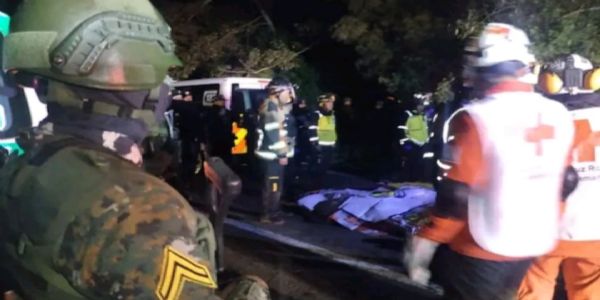
Zelenskyy said Russia had fired nearly 500 drones and about 40 missiles of various types, including ballistic missiles, in the latest wave of strikes on Kyiv and other regions. Local authorities reported at least one fatality and more than two dozen people wounded, with residential buildings, power facilities and heating infrastructure among the sites hit.
Emergency teams battled fires and cleared debris through the night, as sections of the city were left without electricity and heating in sub-zero temperatures. The Ukrainian leader described the bombardment as further proof that Moscow is not serious about ending the nearly four-year-old war, saying the attacks showed Russia “doesn’t want peace” and only responds to diplomatic initiatives with “brutal” force.
Kyiv’s mayor and energy operators warned of renewed strain on the grid, noting that repeated strikes on power plants and substations are designed to sap public morale during the Christmas and New Year period.
Florida talks and 20-point peace plan
Zelenskyy is expected to meet Trump at his Mar-a-Lago residence in Palm Beach, Florida, on Sunday afternoon to discuss a 20‑point peace framework that Ukrainian and US negotiators say is already “90% ready”. The talks are being billed in Kyiv and Western capitals as among the most consequential diplomatic encounters of the war, with issues such as security guarantees, future military assistance, and the status of occupied territories on the agenda.
Zelenskyy has said the Florida meeting is intended “to refine things as much as we possibly can” and “bring everything to 100%,” while cautioning that it is too early to say whether a final agreement will emerge before the New Year.
In recent days, Trump and his envoys have cast Washington as a potential “arbiter” of a settlement, with his allies holding quiet contacts with both Russian and Ukrainian representatives in Miami to explore possible contours of a deal.
Zelenskyy has insisted that any peace arrangement must be “just and lasting” and cannot legitimise Russia’s territorial gains, but he has signalled some flexibility on demilitarised zones and future arrangements in contested regions such as Donetsk and Zaporizhzhia.
Stopover in Canada and Western backing
Before flying to the United States, Zelenskyy made a stop in Canada, where he met Prime Minister Mark Carney in Halifax for talks focused on economic support and reconstruction.
Carney announced an additional 2.5 billion dollars in economic aid for Ukraine, saying the package would help unlock further financing from institutions such as the International Monetary Fund, the World Bank and the European Bank for Reconstruction and Development. He denounced the overnight strikes on Kyiv as “barbaric” and pledged that Canada would stand with Ukraine “throughout this horrific war and when peace finally comes”.
During a video conference with European leaders ahead of his Florida trip, Zelenskyy briefed allies on the planned discussions with Trump and sought continued political and military backing.
French President Emmanuel Macron emphasised the “contrast” between Ukraine’s stated willingness to build a lasting peace and what he described as Russia’s determination to prolong a war it started, while EU leaders Ursula von der Leyen and Antonio Costa reiterated that the bloc’s support for Kyiv would not waver and would continue into 2026, including on Ukraine’s path towards EU membership.
Moscow’s claims and front-line situation
The Russian Defence Ministry claimed it had downed more than 100 Ukrainian drones in what it described as retaliatory action, while also asserting advances on the eastern front.
Moscow said its forces had captured additional settlements in eastern and southern Ukraine, including areas around Hulyaipole and other contested front-line towns, though those claims could not be independently verified and Ukrainian officials reported ongoing heavy fighting in the region.
Ukraine’s Foreign Minister Andrii Sybiha said that Russia’s missile and drone campaign was its “only response to peace efforts”, pointing out that hundreds of projectiles had been launched at Kyiv and other cities just as diplomatic activity was intensifying. He added that roughly a third of the capital had temporarily lost heating following the latest strikes, underscoring the continuing vulnerability of Ukraine’s energy network as winter sets in.
High expectations, uncertain outcome
Zelenskyy has framed the Florida talks as an opportunity to test whether a comprehensive peace deal is realistically within reach while the fighting still rages. He has argued that the scale and timing of the assault on Kyiv underscore the need for “truly strong steps” from the United States and Europe, saying both have the capability to increase pressure on the Kremlin through tougher sanctions and enhanced military support.
European governments and NATO allies will be watching the Zelenskyy–Trump meeting closely, wary of any arrangement that could undercut Ukrainian sovereignty or reward Russian aggression but also eager for a credible pathway to end a conflict that has cost tens of thousands of lives and destabilised global security.
For many in Kyiv, the 10-hour onslaught on the capital on the eve of the Florida summit served as a stark reminder that the window for diplomacy is opening amid some of the war’s heaviest bombardments yet.
---------------
Hindusthan Samachar / Jun Sarkar
28 Dec 2025