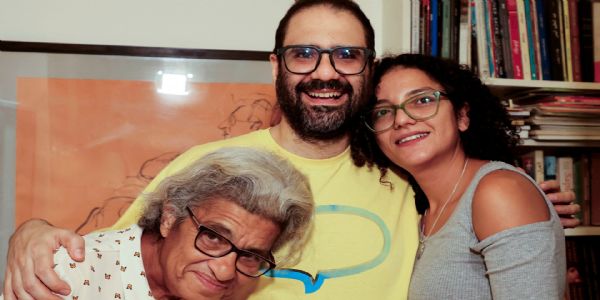
London, 28 December (H.S.): Prime Minister Sir Keir Starmer faces sharp backlash from opposition figures and Jewish organizations for publicly celebrating the arrival of British-Egyptian pro-democracy activist Alaa Abdel Fattah in the United Kingdom, after revelations of the campaigner's social media messages from over a decade ago that appeared to endorse violence against Zionists and police.
Abdel Fattah, a dual national and prominent writer who rose to fame during Egypt's 2011 uprising against Hosni Mubarak, landed in the UK earlier this week following a presidential pardon and the lifting of a three-month travel ban imposed post-release in September.
Starmer expressed delight at his reunion with family—including his 14-year-old son in Brighton—describing the case as a top priority, a stance echoed by Foreign Secretary Yvette Cooper and Justice Secretary David Lammy.
Shadow Minister's Scathing Rebuke
Shadow Justice Secretary Robert Jenrick condemned the remarks as a serious error of judgement in a pointed letter to Starmer, labeling them a personal, public endorsement of someone whose words veered into racism and bloodshed.
Jenrick highlighted unverified posts from Abdel Fattah's X account dating back to 2010, including calls to kill Zionists, Israelis, police, and even burn Downing Street, demanding clarification on whether Starmer knew of them beforehand and if the government unequivocally condemns such rhetoric.
The Jewish Leadership Council decried the effusive welcome amid recent antisemitic incidents like the Bondi Beach attack, questioning Starmer's commitment to combating hatred.
Government sources insist the posts—deemed abhorrent—were unknown until recently, while Labour accuses Jenrick of politicizing a bipartisan effort; the prior Conservative administration had also lobbied intensively for Abdel Fattah's freedom.
Activist's Turbulent Path to Freedom
Abdel Fattah, convicted in 2021 of spreading fake news for a Facebook post on torture and sentenced to five years in a trial human rights groups called grossly unfair, endured over a decade in Egyptian prisons, including hunger strikes and solitary confinement.
Nominated for the 2014 Sakharov Prize but stripped over 2012 Gaza-related tweets he dismissed as misconstrued private exchanges, he told BBC from Cairo in October he was learning how to get back into life and faring better than expected.No incidents marred his UK entry, though Jenrick raised citizenship revocation as a prospect amid security concerns.
---------------
Hindusthan Samachar / Jun Sarkar