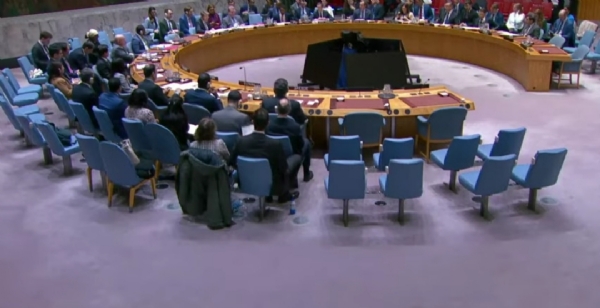
United Nations, 24 December (H.S.): The United States and Iran exchanged sharp rebukes at the United Nations Security Council on Tuesday, exposing deep divisions over preconditions for resuming nuclear negotiations amid heightened global tensions.
US Deputy Middle East Envoy Morgan Ortagus affirmed Washington's readiness for direct talks with Tehran, but underscored an unyielding red line: There can be no enrichment inside of Iran, and that remains our principle.
This stance, reiterated during the session requested by Britain, France, the United States, Denmark, Greece, Slovenia, and South Korea, stems from concerns over Iran's uranium enrichment activities, which Western powers view as a pathway to weaponization.
Ortagus urged Iran to embrace President Trump’s hand of diplomacy, framing the zero-enrichment policy as essential for any meaningful accord.Iran's UN Ambassador Amir Saeid Iravani vehemently countered, decrying the US position as a violation of Tehran's rights under the Nuclear Non-Proliferation Treaty (NPT). Insisting on a zero enrichment policy... means that they are not pursuing fair negotiation, Iravani declared, vowing that Iran will not bow down to any pressure and intimidation.
Tehran maintains its nuclear program is strictly peaceful, rejecting accusations of military ambitions while highlighting what it calls a double standard in international scrutiny.
The acrimonious exchange follows five rounds of indirect nuclear discussions earlier in 2025, which collapsed before a brief 12-day war between Iran and Israel in June. The United States intervened on Israel's behalf, deploying B-2 stealth bombers and Tomahawk missiles to strike key Iranian nuclear facilities at Fordow, Natanz, and Isfahan—actions Iran decried as unlawful assaults on IAEA-safeguarded sites.
Although US intelligence later assessed the strikes as merely delaying Iran's capabilities by months, the conflict obliterated diplomatic momentum.
Complicating matters, the IAEA reported on October 18, 2025, having no information on the status of Iran's enriched uranium stockpiles, including over 400 kilograms of near-weapons-grade material—enough, if further processed, for roughly 10 nuclear devices. Under-Secretary-General Rosemary DiCarlo briefed the Council that despite intensified diplomacy, there was no agreement on the way forward, with Iran ceasing JCPOA commitments since February 2021.
The session also spotlighted the controversial snapback of UN sanctions, activated in late September 2025 by Britain, France, and Germany after Iran failed to uphold the 2015 Joint Comprehensive Plan of Action (JCPOA).
This reinstated pre-2015 measures from resolutions like 1737 (2006) and 1929 (2010), despite objections from Russia and China, who deem the process procedurally flawed and the JCPOA provisions expired on October 18.
Russia accused the meeting of fostering anti-Iranian sentiment, while China blamed the US withdrawal from the JCPOA in 2018 and subsequent strikes for eroding trust. E3 nations countered that snapback serves as leverage for dialogue, not an endpoint, with France warning of threats to international peace from Iran's non-compliance. Iran insists Resolution 2231 (2015) lapsed entirely, rendering the discussion illegitimate.
---------------
Hindusthan Samachar / Jun Sarkar
24 Dec 2025
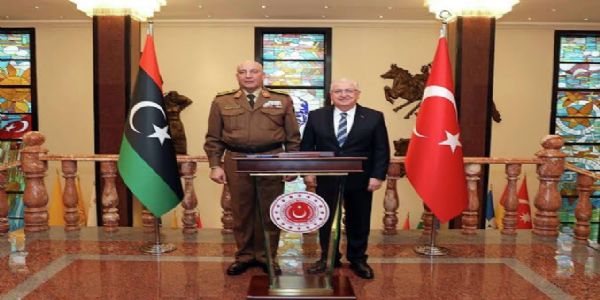
Libya's Military Pinnacle Shattered: Top General, Aides Perish in Catastrophic Jet Plunge Near Ankara
24 Dec 2025