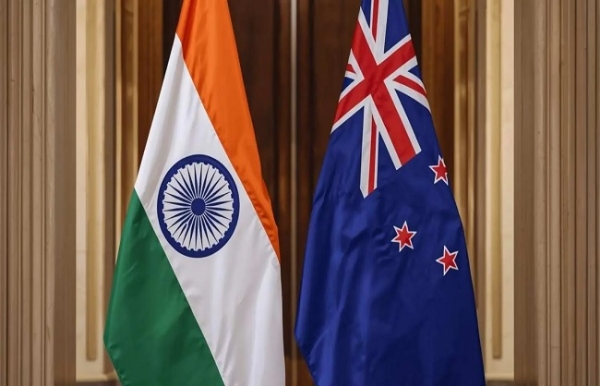
New Delhi, 22 December (H.S.): India and New Zealand announced the conclusion of Free Trade Agreement (FTA) negotiations on Monday, aiming to boost bilateral trade in goods and investments, with New Zealand Prime Minister Christopher Luxon confirming the breakthrough after talks initiated in May this year.
The Commerce and Industry Ministry described the comprehensive, balanced, and forward-looking pact as a major economic and strategic milestone in India's Indo-Pacific engagement, potentially signing within three months and ranking among India's swiftest FTAs with a developed nation—launched during Luxon's March 2025 India visit and finalized in nine months, reflecting shared political will.
Modi, Luxon Celebrate Doubling Trade, Youth Opportunities
Prime Minister Narendra Modi hailed the FTA as a historic achievement elevating ties, projecting doubled bilateral trade over five years and welcoming over $20 billion in New Zealand investments across sectors, underpinned by India's vibrant startups, reforms, and innovation ecosystem; he pledged sustained collaboration in sports, education, and culture.
Luxon echoed via X that 95% of New Zealand exports to India gain tariff reductions or elimination, potentially surging annual exports from $1.1 billion to $1.3 billion over two decades, accessing 1.4 billion consumers in the world's fastest-growing economy.
Key Provisions Unlock Markets, Safeguard Sensitivities
India secures zero-duty access for 100% of its exports via tariff liberalization on 70% of lines covering 95% bilateral trade ($1.3 billion in FY 2024-25, with India's exports at $711.1 million and imports $587.1 million), empowering labor-intensive sectors like textiles, apparel, leather, footwear, marine products, gems, jewelry, handicrafts, engineering goods, and automobiles.
New Zealand commits $20 billion FDI over 15 years, 5,000 Temporary Employment Entry visas for professionals, and 1,000 Work & Holiday visas, alongside post-study work pathways.
Agricultural productivity partnerships establish Centres of Excellence for apples, kiwifruit, and honey, with duty-free inputs like wooden logs, coking coal, and metal scraps for manufacturing; sensitive protections exclude dairy, sugar, coffee, spices, edible oils, precious metals, copper cathodes, and rubber. Cooperation spans AYUSH, culture, fisheries, audiovisual tourism, forestry, horticulture, and traditional knowledge, addressing non-tariff barriers via regulatory alignment.
---------------
Hindusthan Samachar / Jun Sarkar