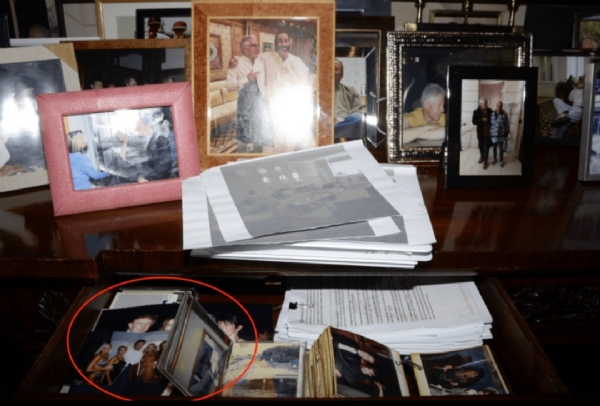
Washington , 21 December (H.S.): Democrats on the House Oversight Committee ignited a fierce controversy on Saturday, accusing the US Justice Department of surreptitiously removing at least 16 Jeffrey Epstein-related files from its public webpage, including the notorious file 468—a photograph purportedly depicting President Donald Trump amid a trove of images from Epstein's estate.
The uproar intensified after the files briefly appeared on Friday before vanishing without explanation, prompting demands for Attorney General Pam Bondi to clarify potential cover-ups and ensure full transparency under the Epstein Files Transparency Act.
Missing File 468 Sparks Partisan Clash
File 468 captured a cluttered desk drawer brimming with photo albums and documents, prominently featuring an image of Trump in a white shirt alongside women—one in revealing attire—alongside a partially obscured shot of Trump, Melania Trump, Jeffrey Epstein associate Ghislaine Maxwell, and Epstein himself, presumed taken at Mar-a-Lago in February 2000 prior to Trump's marriage to Melania.
House Oversight Democrats posted on X: This photo, file 468, from the Epstein files that includes Donald Trump has apparently now been removed from the DOJ release, directly tagging Bondi with queries: Is this true? What else is being covered up?
DOJ Defends Redactions as Victim Safeguards
The Justice Department, which began rolling out thousands of heavily redacted pages on Friday per a congressional mandate signed by Trump on November 19, attributed removals and redactions to protecting over 1,200 Epstein victims' privacy, shielding child sexual abuse imagery, active investigations, and national security concerns, with Deputy US Attorney Todd Blanche insisting no politician names were suppressed unless victims. Additional releases are slated for coming weeks amid website crashes from high traffic, though critics like Rep. Robert Garcia decried the partial rollout as a White House cover-up.
Broader Revelations and Survivor SkepticismThe files encompass legal documents, flight logs, and images of high-profile figures like Bill Clinton, Michael Jackson, Prince Andrew, Mick Jagger, and others at Epstein's properties—none implying wrongdoing absent context—alongside Epstein's Palm Beach home footage and Lolita novel inscriptions on bodies.
Survivors such as Marina Lacerda and Liz Stein expressed dismay over redactions fueling conspiracies, urging unfiltered disclosure, while White House spokeswoman Abigail Jackson hailed the administration's unprecedented transparency and victim advocacy over prior Democratic efforts.
Political Ramifications Escalate
Reps. Ro Khanna and Thomas Massie threatened impeachment or prosecution for non-compliance, as the DOJ must log redactions to Congress within 15 days; Trump maintains social-only ties with Epstein, severed in the early 2000s, denying criminal involvement. This saga, unfolding amid the Act's 30-day deadline, underscores enduring scrutiny of Epstein's elite network and the DOJ's handling of its archives.
---------------
Hindusthan Samachar / Jun Sarkar