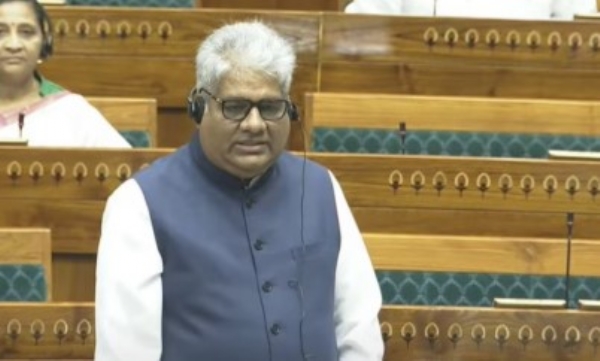
New Delhi, 1 December (H.S.): Union Environment and Climate Change Minister Bhupendra Yadav informed the Lok Sabha on Monday that vehicle emissions, industrial pollution, construction dust, and biomass burning from local sources—not stubble burning in Punjab and Haryana—represent the primary causes of air pollution in Delhi-NCR. He highlighted a nearly 90 percent reduction in stubble-burning incidents in Punjab and Haryana compared to 2022 levels, accompanied by notable improvements in Delhi's air quality.
Responding to a written question, Yadav noted that days with an Air Quality Index (AQI) below 200 in Delhi have risen from 110 in 2016 to 200 in 2025, while days categorized as very poor or severe dropped from 71 in 2024 to 50 this year. Although stubble burning contributes to winter pollution spikes, he stressed that the bulk of Delhi-NCR's pollution stems from internal factors rather than farm residue practices.
The government has allocated over 3,120 crore rupees to Punjab and Haryana for stubble management from 2018-19 to 2025-26, distributing more than 260,000 crop residue management (CRM) machines to farmers and cooperatives. Directives include free machine access for small farmers, mandatory use of rice straw-based biomass pellets and briquettes in brick kilns and thermal power plants, and a requirement for NCR-area plants to co-fire at least 5-10 percent biomass with coal.
To enforce compliance, the Central Pollution Control Board (CPCB) has deployed 31 flying squad teams in hotspot districts of Punjab and Haryana for daily monitoring and reporting. High-level central meetings with state officials and district administrations have issued strict instructions on machine utilization and surveillance.
Despite overall declines, stubble-burning cases in Punjab rose from 1,547 in October to 3,470 in the first 29 days of November—a 124 percent increase.
District-wise spikes included Ferozepur (166 to 381), Sangrur (279 to 414), Tarn Taran (363 to 322), Bathinda (91 to 277), Mansa (41 to 265), Sri Muktsar Sahib (33 to 343), and Moga (32 to 300), with the lowest incidents in Pathankot, Mohali, SBS Nagar, and Hoshiarpur.
---------------
Hindusthan Samachar / Jun Sarkar