New Delhi, May 24(HS): India once again reaffirmed its commitment to dialogue and diplomacy over conflict, emphasizing the importance of secure and uninterrupted maritime trade, respect for international law, reliable supply chains, and global economic stability. External Affairs Minister S. Jaishankar stated that India opposes the use of resources and market dominance as geopolitical weapons.
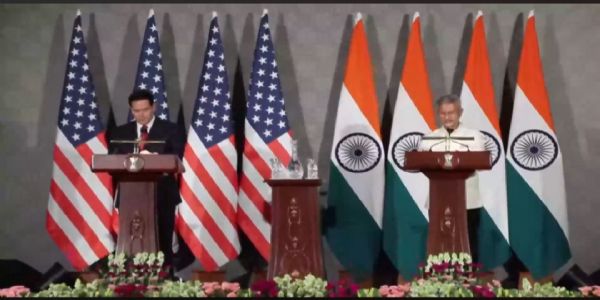
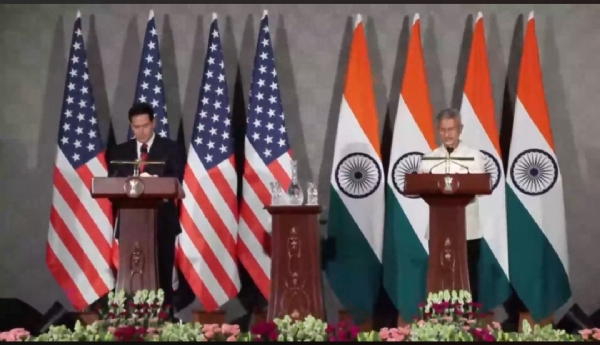
A delegation-level meeting was held on Sunday between Jaishankar and his American counterpart Marco Rubio, during which both sides stressed the need to further strengthen the India–U.S. strategic partnership. Addressing a joint press conference afterward, Jaishankar said India remains committed to meeting the energy requirements of its 1.4 billion people and supports the procurement of affordable fuel from diverse global sources. He also underlined the importance of the “Make in India” policy, particularly in the defence sector, amid ongoing global conflicts and economic uncertainties.
Jaishankar noted that cooperation between India and the United States continues to expand steadily. He said the two sides held extensive discussions on a range of global and regional issues, including developments in West Asia, East Asia, and the Gulf region. He emphasized the need for an interim trade agreement between the two countries at the earliest, which could pave the way for a broader bilateral trade pact in the future. He further highlighted immense possibilities for cooperation in nuclear energy, rare earth minerals, and artificial intelligence.
The External Affairs Minister stated that India’s energy imports from the United States have witnessed significant growth over the past year. He stressed that diversified sourcing remains essential for energy security and described the U.S. as an increasingly reliable energy partner for India.
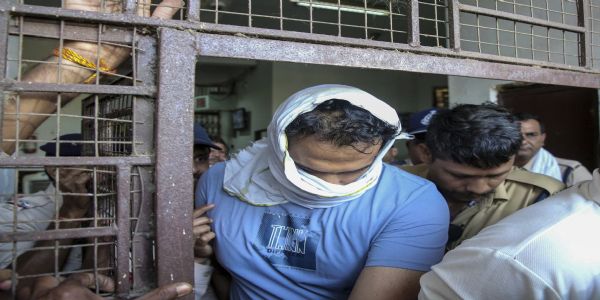
Jaishankar also remarked that people-to-people ties constitute the strongest pillar of the India–U.S. partnership. He emphasized the importance of maintaining simplified visa procedures for legitimate travellers. Reiterating India’s zero-tolerance policy toward terrorism, he expressed appreciation for American cooperation regarding the extradition of a key conspirator involved in the 26/11 Mumbai terror attacks.
He added that India maintains strong relations with the United States, Israel, Iran, and Gulf nations simultaneously. India, he said, does not view regional diplomacy through a “zero-sum” lens and seeks to maintain balanced partnerships with all stakeholders.
Meanwhile, U.S. Secretary of State Marco Rubio stated that the momentum in India–U.S. relations remains strong. He described India as a vital strategic partner and said that both democracies are working together to address major global challenges. Rubio clarified that America’s relations with other countries do not come at the expense of its strategic partnership with India.
Rubio further said that India is an important strategic partner with advanced technological capabilities. Both democracies, he noted, are collaborating in the fields of cutting-edge technologies, global innovation, and shared national interests in the 21st century.
Addressing regional developments, Rubio said in New Delhi that positive developments regarding the Strait of Hormuz and Iran could emerge soon. He revealed that discussions with partner nations in the Gulf region over the past 48 hours had yielded encouraging progress. While acknowledging that a final resolution on the Iran issue is still pending, Rubio said the United States remains determined to ensure that Iran never acquires nuclear weapons.
Describing the Strait of Hormuz as an international waterway, Rubio said that threatening commercial shipping routes would constitute a violation of international law.
On social issues, Rubio described racist remarks against Indians in the United States as serious and unacceptable. He acknowledged that offensive comments may arise in every society but emphasized that America remains a welcoming nation enriched by people from around the world.
Rubio also clarified that changes to J-1, F-1, and H-1B visa regulations are part of a broader global reform process and are not specifically targeted at India. He praised Indian companies for investing more than $20 billion in the U.S. economy and stated that the United States is working toward modernizing and making its immigration system more sustainable. He admitted that temporary disruptions and challenges may arise during the transition period.
---------------
Hindusthan Samachar / Jun Sarkar
24 May 2026
Red Fort Blast Probe Deepens as NIA Details AI Misuse, Rocket IED Tests, and a Wider Terror Conspiracy
24 May 2026