Kolkata, 09 June (H.S.) : The first month of the Suvendu Adhikari-led government in West Bengal has been marked by high-intensity administrative action, large-scale anti-corruption enforcement, welfare announcements, investment outreach, and deepening political confrontation across party lines.
The government was sworn in on May 9 at the Brigade Parade Ground. While the ruling Bharatiya Janata Party has described this period as the beginning of “governance reform and administrative reset,” opposition parties have alleged that the government has initiated a phase of political targeting and excessive enforcement.
A major welfare announcement in the first month has been the rollout of the Annapurna Scheme, under which financial assistance has reportedly been transferred to around 3.2 million women beneficiaries, with ₹3,000 credited to each account. Additionally, free travel for women in state-run buses has been introduced, which the government has projected as a major step towards women-centric welfare support.
The most dominant feature of the first month has been a widespread crackdown on alleged corruption. Enforcement actions have been reported across departments, with claims of dozens of arrests and investigations in the first week and hundreds over the month. Several high-profile names that have surfaced include Sujit Bose, Swarup Biswas, Dilip Mandal, Jahangir Khan, Asit Majumdar, Sabyasachi Dutta, and Rabindranath Chattopadhyay.
Central agencies such as the Enforcement Directorate and the Central Bureau of Investigation have intensified probes into cases including the teacher recruitment scam and other alleged financial irregularities, significantly escalating political tensions.
Opposition parties have alleged increased pressure on their leadership. Reports indicate intensified questioning and summons involving Trinamool Congress national general secretary Abhishek Banerjee, along with other leaders. Former Chief Minister Mamata Banerjee has strongly criticised the government, alleging “political vendetta” and “unnecessary strictness” in enforcement actions.
On the other hand, the Communist Party of India (Marxist) has strongly criticised the government’s early actions. CPI(M) state general secretary Mohammed Salim has alleged that the pattern of arrests and enforcement reflects politically motivated targeting rather than impartial governance. The Congress has also reacted sharply, with senior leader Adhir Ranjan Chowdhury accusing the government of prioritising demolition drives and coercive actions over development.
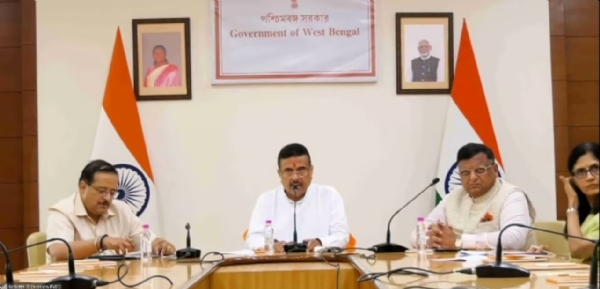
In response, the government has set up a special investigation committee headed by a retired judge to probe allegations of systemic corruption. Several cases have also been referred to central agencies for deeper investigation. Administrative reforms have also been initiated in recruitment processes to improve transparency in government hiring.
Border security has emerged as another major focus area. The government has intensified surveillance along the India–Bangladesh border, established holding centres for undocumented migrants, and accelerated repatriation efforts. According to official claims, nearly 5,000 individuals have reportedly returned across the border within the first month.
A key administrative decision includes the transfer of approximately 150 acres of land to the Border Security Force (BSF) to strengthen fencing infrastructure along the Bangladesh border.
On the development front, the government has moved to implement the Ayushman Bharat health scheme after years of non-participation, along with expansion of Jan Aushadhi centres and strengthened healthcare initiatives including cancer prevention programmes.
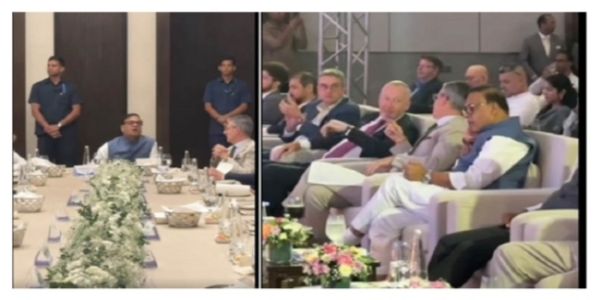
Industrial outreach has also been intensified, with meetings involving major corporate leaders including Karan Adani of the Adani Group and S. N. Subrahmanyan of Larsen & Toubro. The government has focused on reviving stalled projects and attracting new investment.
Infrastructure discussions include shifting the Tajpur port project to Dadanpatrabarhi, renewed interest in industrial revival in Singur linked to the Tata Group, and a high-level meeting with Railway Minister Ashwini Vaishnaw, which reportedly indicated investment proposals worth nearly ₹1 trillion for railway infrastructure and revival of stalled metro and rail projects.
For government employees, major announcements include clearing pending dearness allowance dues, proposing the Seventh Pay Commission, restarting recruitment processes, and increasing the upper age limit for applicants by five years.
However, the first month has also seen strong controversy. Anti-encroachment drives and demolition actions have triggered protests, especially among hawkers and small traders, who have alleged inadequate rehabilitation. Civil society groups and opposition parties have criticised the use of strict enforcement measures.
Opposition leaders, including CPI(M)’s Mohammed Salim and Congress leader Adhir Ranjan Chowdhury, have accused the government of prioritising coercive action over governance and development. A dissenting Trinamool Congress MLA, Akhruzzaman, has also criticised police action and arrests, claiming rising public dissatisfaction.
The ruling BJP, however, has defended the administration’s approach. State BJP president Shamik Bhattacharya stated that the government is restoring the rule of law and addressing long-standing corruption and administrative stagnation in the state.
Political analysts believe the first month reflects a high-intensity governance model marked by rapid enforcement and policy signalling, but the longer-term impact will depend on whether these measures translate into sustained administrative outcomes or further political escalation.
Hindusthan Samachar / Satya Prakash Singh