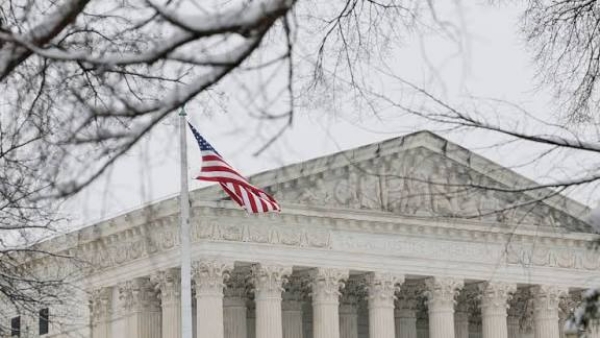
Washington, 9 December (H.S.): The US Supreme Court’s conservative majority appeared on Monday to side with the Trump administration in a pivotal case that could reshape the independence of America’s federal agencies. The case, Trump v. Slaughter, challenges a long-standing precedent that protects members of independent commissions from being removed by the president without cause.
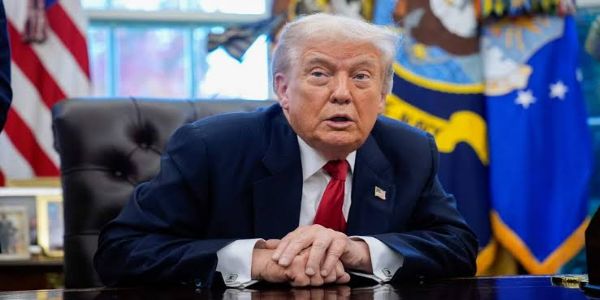
The dispute began after President Donald Trump dismissed Rebecca Slaughter—then a Democratic appointee to the Federal Trade Commission (FTC)—and another commissioner in March, citing their views as “inconsistent with the administration’s priorities.” Slaughter, first appointed by Trump in 2018 to fill a Democratic seat and later reappointed by President Joe Biden, filed a lawsuit contesting her removal.
At the centre of the case lies a 90-year-old precedent, Humphrey’s Executor v. United States (1935), which upheld Congress’s authority to insulate agencies such as the FTC from direct presidential control. The 1935 ruling determined that while presidents may freely remove executive officers, they lack such power over officials serving in quasi-judicial or quasi-legislative capacities.
During over two hours of oral arguments, the Court’s conservative justices appeared sceptical of retaining that precedent. Justice Neil Gorsuch described the 1935 decision as a “decaying husk” that undermines accountability, while Solicitor General John Sauer argued it represents an “indefensible outlier” in constitutional interpretation.
The Court’s liberal justices, however, warned of grave institutional consequences if the precedent were overturned. Justice Sonia Sotomayor cautioned that doing so would “destroy the structure of government” envisioned by Congress, while Justice Elena Kagan asked, “Where does this lead?” noting that civil service protections have existed for more than a century.
Representing Slaughter, attorney Amit Agarwal defended the long-standing role of independent commissions, asserting that “multi-member boards with removal protections have been part of the American story since 1790.”
A lower court previously ruled Slaughter’s removal unlawful, but the Supreme Court, in a 6–3 emergency decision in September, allowed Trump’s dismissal to stand pending its final judgment. The ruling, expected in the coming months, could significantly expand presidential authority over federal agencies.
The Court is also preparing to hear a related case concerning Trump’s removal of Federal Reserve Board member Lisa Cook, a decision that could further define the limits of executive power in the modern administrative state.
---------------
Hindusthan Samachar / Jun Sarkar

09 Dec 2025