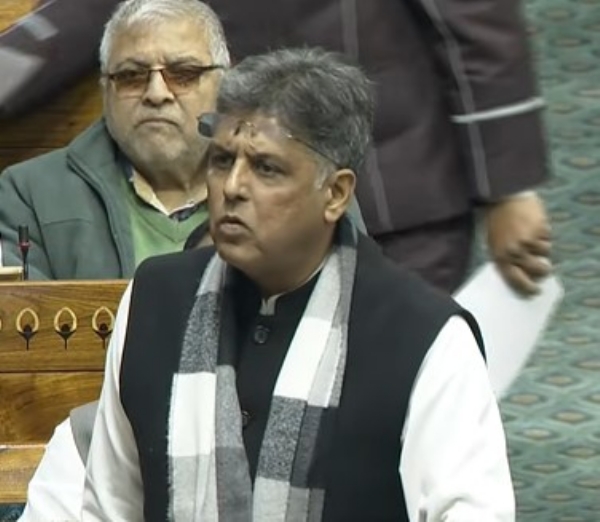
New Delhi, 9 December (H.S.): Congress MP Manish Tewari on Tuesday urged the government to introduce three key electoral reforms during a discussion on election reform initiatives in the Lok Sabha. He called for changes in the selection process of election commissioners, an immediate halt to the ongoing Special Intensive Revision (SIR) of electoral rolls, and a ban on direct cash transfers by the government ahead of elections.
Tewari recalled that on June 15, 1949, Dr. B.R. Ambedkar had presented the draft proposal to establish the Election Commission, which several members had supported as a permanent body.
“The Constituent Assembly debates clearly show that the framers of our Constitution anticipated staggered elections in different states,” he said, adding that the rationale for the concept of One Nation, One Election is, therefore, no longer valid.
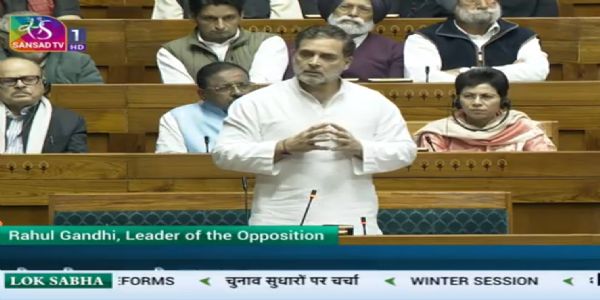
The Congress leader noted that as per the 2023 legislation, the selection committee for appointing election commissioners comprises the Prime Minister, the Leader of the Opposition in the Lok Sabha, and a Union Cabinet Minister nominated by the Prime Minister.
Suggesting a broader and more balanced framework, Tewari proposed including the Leader of the Opposition in the Rajya Sabha and the Chief Justice of India in the selection panel.He argued that the SIR process — the Special Revision of Electoral Rolls — lacks legal backing.
“The Election Commission is empowered to conduct such revisions only in areas where discrepancies are found, not across an entire state,” Tewari contended, demanding that the exercise be suspended nationwide.
Raising his third major concern, Tewari called for a complete prohibition on direct benefit transfers (DBT) in the months preceding elections, stating that such practices “violate the spirit of democracy and exert undue influence on voters.”
Highlighting the evolution of India’s electoral system, the Congress MP said the last major reform occurred in 1988–89, when then Prime Minister Rajiv Gandhi reduced the voting age from 21 to 18 years — a decision that expanded democratic participation. “Since then, no significant change has been made,” he remarked.
Concluding his address, Tewari emphasized that in the present context, the impartiality of the Election Commission and the protection of democracy require urgent structural, procedural, and ethical reforms.
---------------
Hindusthan Samachar / Jun Sarkar
09 Dec 2025
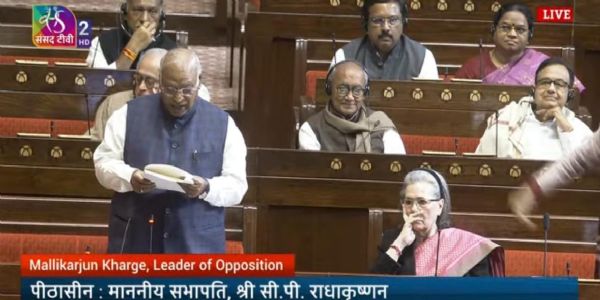
Congress Was the Party That Made ‘Vande Mataram’ a National Call: Kharge Hits Back at BJP in Rajya Sabha

09 Dec 2025